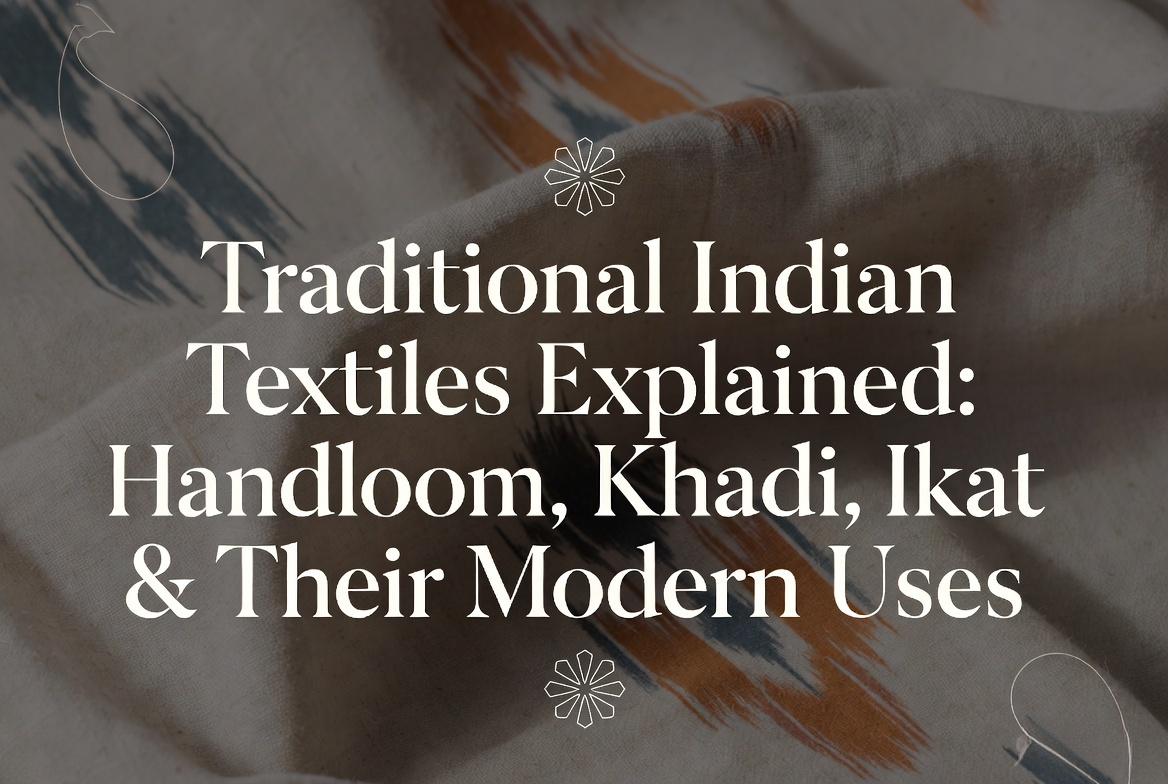
India’s textile heritage is not a museum piece. It is a living craft system that still feeds millions of artisans while quietly shaping global fashion, interiors, and sustainable design. From the coarse honesty of khadi to the precise geometry of ikat, these fabrics carry centuries of regional knowledge. Understanding them helps you buy better, wear better, and support the people who still make them by hand.
What Makes Indian Traditional Textiles Unique
Most traditional Indian textiles share three traits: they are made on handlooms or with hand-driven processes, they rely on local materials and natural or low-impact dyes, and their designs are deeply tied to specific regions and communities. Unlike mill-made fabric, the slight irregularities in weave, dye, or motif are not flaws — they are the signature of human work.
The main categories people encounter today are handloom cottons and silks, khadi, ikat, and a cluster of regional specialties such as Banarasi, Chanderi, Kalamkari, Bandhani, and block-printed fabrics. Each has its own story and practical strengths.
Handloom: The Broad Foundation
Handloom simply means fabric woven on a loom powered by the weaver’s hands and feet rather than electricity. India still has the largest number of handloom weavers in the world. The yarn may be cotton, silk, wool, or blends, and the weave can range from plain to complex jacquard-style patterns.
Key characteristics include a slightly irregular surface that feels alive, excellent breathability, and the ability to take natural dyes well. Because the process is slow, handloom fabric often costs more than power-loom equivalents, but it lasts longer and develops a beautiful softness with washing.
Modern uses have expanded far beyond saris and dhotis. Designers now cut handloom cotton into shirts, trousers, jackets, and dresses. Interior brands use it for cushion covers, curtains, and upholstery. Several Indian and international labels market “handloom” as a sustainability claim, pairing it with organic cotton or recycled silk.
Khadi: The Fabric of Independence and Simplicity
Khadi is hand-spun and hand-woven. The yarn is spun on a charkha, then woven on a handloom. Originally promoted by Mahatma Gandhi as a tool of self-reliance, khadi remains a symbol of conscious consumption.
It is usually cotton, though silk and wool versions exist. The texture is slightly uneven and matte. Good khadi has a soft, almost felted hand after a few washes and becomes more comfortable with age. It is highly breathable and temperature-regulating — cool in summer, surprisingly warm in mild winters.
Today khadi appears in tailored shirts, structured jackets, kurtas, and even formal trousers. Some contemporary labels blend khadi with linen or use it for minimalist Western silhouettes. Home textiles — bedcovers, throws, and table linen — also use khadi because of its honest texture and durability. The Khadi and Village Industries Commission still certifies genuine khadi, which helps buyers avoid power-loom imitations.
Ikat: The Art of Resist Dyeing Before Weaving
Ikat is a resist-dyeing technique in which yarns are tied and dyed before they are woven. The pattern is already present in the threads, so the final cloth shows characteristic soft, feathered edges where the dye has bled slightly.
India has several strong ikat traditions. Pochampally and Chirala in Telangana and Andhra Pradesh produce bold geometric cotton and silk ikats. Patola from Gujarat is a double-ikat silk prized for its precision and historically reserved for special occasions. Odisha’s Bandha ikat often features motifs drawn from nature and temple architecture.
Because the design is locked into the yarn, ikat fabrics have a depth that printed cloth cannot match. They are strong, hold colour well, and age gracefully.
Modern designers use ikat for everything from structured blazers and wide-leg trousers to scarves, bags, and statement upholstery. Global brands have featured Indian ikat in ready-to-wear collections, while Indian labels keep the technique visible in both traditional and experimental cuts. The slight “blur” of genuine ikat has become a desirable aesthetic rather than a technical limitation.
Other Notable Traditional Textiles
Banarasi – Dense silk (sometimes with zari) woven in Varanasi. Known for intricate floral and paisley motifs. Once reserved for bridal wear, it now appears in lighter modern weaves used for jackets, lehengas with contemporary cuts, and even luxury home textiles.
Chanderi – A fine, lightweight fabric traditionally made with silk and cotton in Madhya Pradesh. It has a subtle sheen and crisp drape. Designers favour it for summer dresses, shirts, and layered garments.
Kalamkari – Hand-painted or block-printed cotton using natural dyes, mainly from Andhra Pradesh. Mythological and floral themes dominate. Today it is popular for wall hangings, kurtas, and casual Western clothing.
Bandhani – Tie-and-dye technique from Gujarat and Rajasthan. Tiny dots form intricate patterns. Modern versions appear on scarves, dresses, and even denim collaborations.
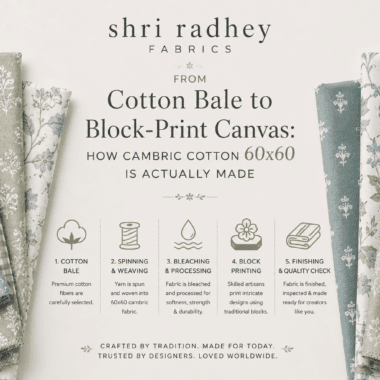
Block-printed fabrics (Sanganer, Bagru, Ajrakh) – Wooden blocks stamp natural or reactive dyes onto cotton. These remain popular for shirts, dresses, bed linen, and soft furnishings because they are relatively affordable and visually rich.
Modern Uses Beyond Traditional Clothing
Traditional Indian textiles no longer live only in ethnic wardrobes. Several clear trends have emerged:
- Contemporary fashion – Structured tailoring, co-ord sets, and Western silhouettes made from handloom, khadi, and ikat. The fabric does the talking; the cut stays clean.
- Sustainable and slow fashion – Brands highlight the low-energy production, natural dyes, and artisan livelihoods. Khadi and handloom fit naturally into this narrative.
- Home and interiors – Cushion covers, curtains, bedcovers, and upholstery in ikat, block prints, and handloom cotton. The textures add warmth without looking overtly ethnic.
- Accessories and lifestyle products – Bags, shoes, lampshades, and even stationery covers made from leftover or specially woven traditional fabrics.
- Global collaborations – International designers and high-street brands source Indian handloom and ikat for limited collections, bringing the techniques to new markets while creating demand for the weavers.
How to Choose and Care for These Fabrics
Look for slight irregularities in weave or dye — they usually signal hand work. Check for certifications when buying khadi. For ikat, the blurred edges of the motif are a good sign of genuine yarn-dyed work rather than a print.
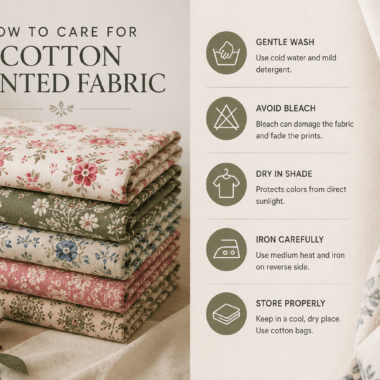
Most of these fabrics prefer gentle washing. Hand-wash or use a delicate cycle with mild detergent. Avoid harsh wringing. Many improve with age if treated kindly. Store them away from direct sunlight to protect natural dyes.
Why These Textiles Still Matter
Traditional Indian textiles are not nostalgia. They represent skilled labour, regional identity, and a production system that can be far less resource-intensive than fast fashion. When you choose a genuine handloom shirt, a khadi jacket, or an ikat cushion, you are supporting a craft economy that still employs large numbers of rural artisans.
At the same time, the fabrics themselves are practical: breathable, durable, and full of visual character. That combination of cultural depth and everyday usefulness explains why they continue to find new life in modern wardrobes and homes.
Whether you are building a thoughtful wardrobe, furnishing a space, or simply curious about where cloth comes from, these textiles reward a closer look. The more you understand the difference between handloom and power-loom, between true ikat and a printed imitation, the better your choices become — for quality, for aesthetics, and for the people who still make them one thread at a time.